
Where elegance meets culture
Milan is not a city you merely visit , it is a city to be discovered.
Italy’s economic capital, yes, but also a refined treasure chest of artistic, architectural, and cultural wonders. This is the city Leonardo left his mark on, where opera is a sacred ritual, and where design and fashion are a language of daily life.
Founded around 400 B.C. by the Insubrian Gauls, Milan became a major cultural and artistic center during the Renaissance, with artists such as Leonardo da Vinci living and working there. The city is home to important museums, including the Brera Art Gallery, and the internationally renowned Teatro alla Scala. Milan is a dynamic and constantly evolving city, with new residential and commercial areas emerging. Let’s take a look at the most characteristic features of this quintessential cosmopolitan city, starting with its five most beautiful neighborhoods.
Between Enchantment and Innovation
Milan reveals two contrasting yet complementary dimensions.
On one hand, it is defined by its relentless rhythm, vibrant energy, and the fast-paced flow of urban life, a city constantly in motion, driven by ambition and innovation. On the other hand, its rich palette of colours, textures, and architectural details underscores a timeless aesthetic charm.
Even in its most familiar corners, Milan manages to surprise, inspiring those who observe it closely. It is a place where the ordinary becomes poetic, where everyday scenes take on a unique atmosphere, transforming the city into a kind of “magical” Italy, alive with unexpected beauty and creative potential.


Historic Centre
Milan’s Historic Center is the vibrant heart of the city, where history, art, and modernity come together. Dominated by the majestic Cathedral of the Duomo, the undisputed symbol of Milan, the center features a mix of elegant squares, luxury shopping streets like Via Montenapoleone, and iconic landmarks such as the Galleria Vittorio Emanuele II and Teatro alla Scala. Strolling through this area means immersing yourself in the city’s millennia-old history, surrounded by historic buildings, prestigious museums, and timeless cafés that reflect both Milan’s past and present. It’s a must-see for first-time visitors and a place to rediscover the city’s most authentic soul.
Duomo
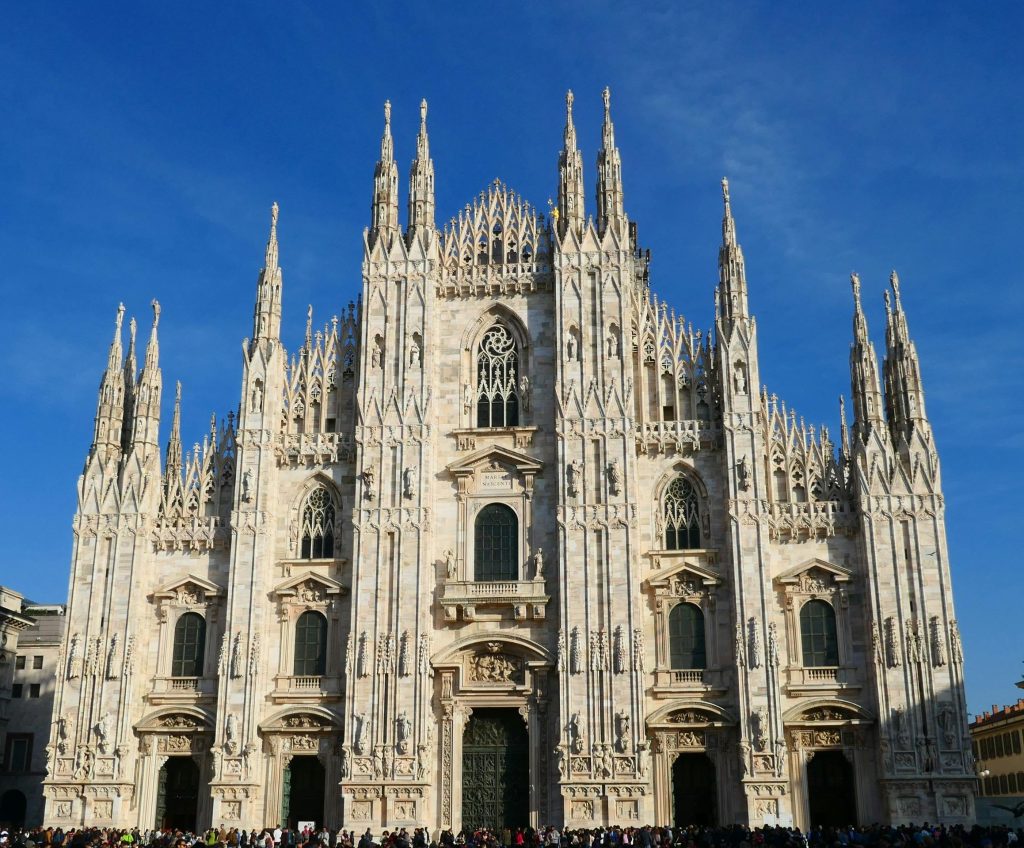
A true symbol of Milan in both fame and merit, the Duomo is without a doubt a must-visit. Not only should you explore its stunning interior, but a walk on its rooftop terraces is an experience not to be missed. From there, you can enjoy a breathtaking panoramic view of the city—especially at sunset, when the golden light bathes the cathedral’s marble, giving it an almost luminous glow. For the perfect end to your visit, sip an aperitivo on the nearby terrace facing the Duomo, taking in one of Milan’s most iconic scenes.

Galleria Vittorio Emanuele II
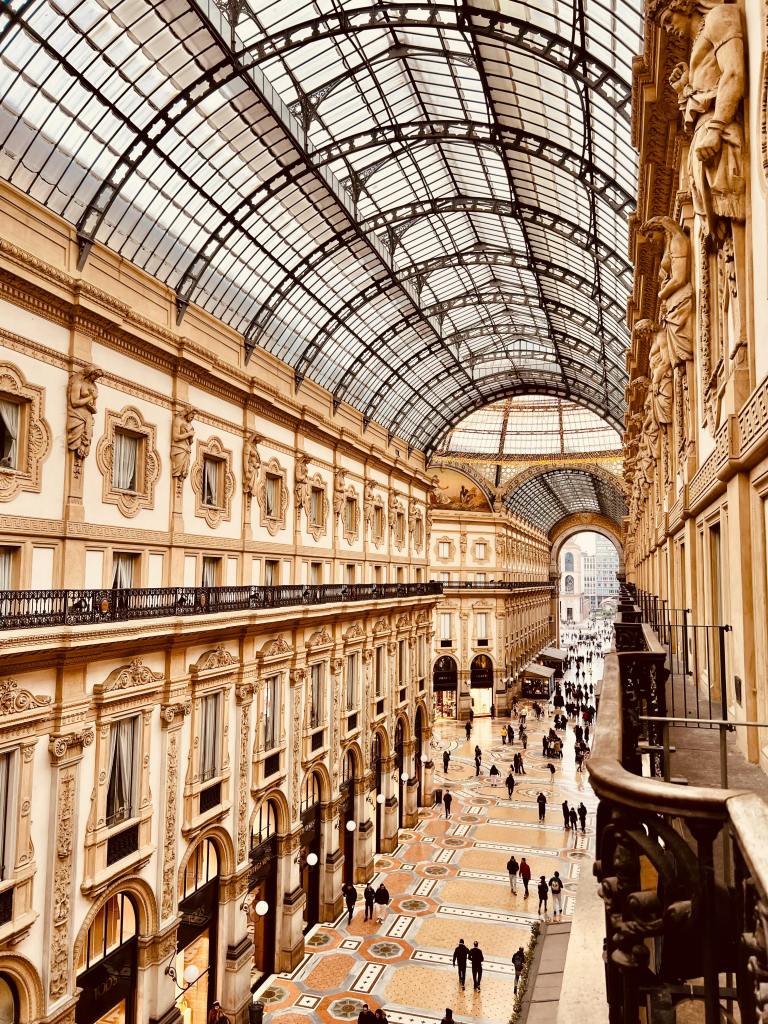
The Galleria Vittorio Emanuele II is the vibrant heart of the city, renowned for its luxury boutiques, colorful mosaic floors, elegant shop windows, fine jewelry stores, and stylish cafés and restaurants. It’s not just a shopping destination, but a symbol of Milanese elegance and history.
Sforza Castle

The Sforza Castle is an absolute must-visit, surrounded by numerous legends of ghosts and mysterious apparitions. Inside, it houses masterpieces of Italian art, including the famous Rondanini Pietà by Michelangelo Buonarroti. The castle also features works by the great Leonardo da Vinci—the Sala delle Asse being one of the most notable examples of his genius preserved within its walls.
Teatro alla Scala

The Teatro alla Scala takes its name from the ancient Church of Santa Maria alla Scala, which once stood on the same site. Designed by architect Giuseppe Piermarini, the theater was inaugurated in 1778 with the performance of L’Europa Riconosciuta, one of Antonio Salieri’s most important works.It was during the 19th century that La Scala was truly consecrated as the premier venue for Italian opera.
The greatest composers of the era—Rossini, Donizetti, Verdi, Puccini, and Toscanini—presented some of their most iconic works here. The theater was the stage for masterpieces such as Lucia di Lammermoor, Aida, Edgar, and La Gazza Ladra, solidifying its reputation as the symbolic home of Italian melodrama.
Church of Santa Maria delle Grazie
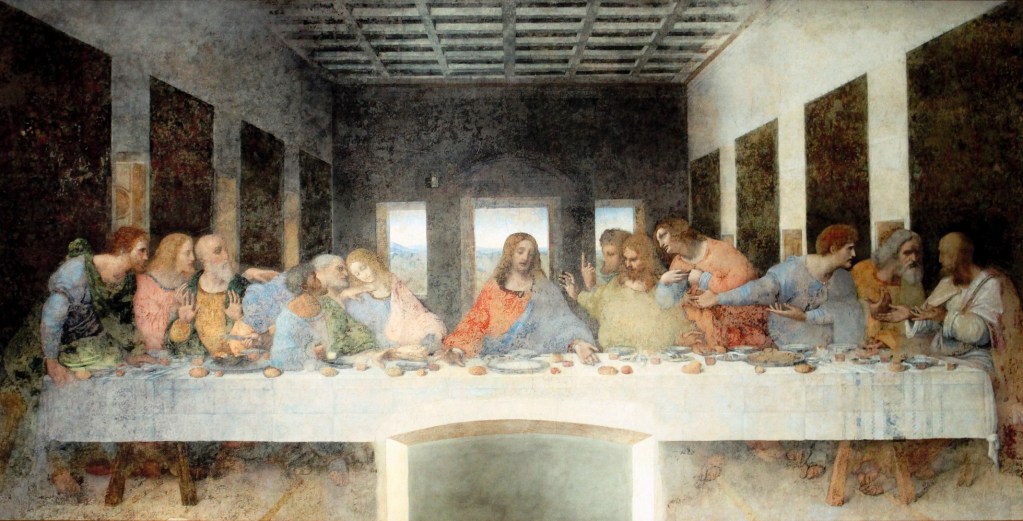
A visit to the Church of Santa Maria delle Grazie is absolutely unmissable. While its exterior appears quite simple, the interior is far more elaborate and houses one of Leonardo da Vinci’s most famous masterpieces: The Last Supper.
The Cenacolo, or Last Supper, is a mural painting by Leonardo located in the refectory of Santa Maria delle Grazie in Milan. It depicts the biblical scene of Jesus’ final meal with his apostles, capturing a moment of profound emotion and significance.
Fashion Quadrilateral
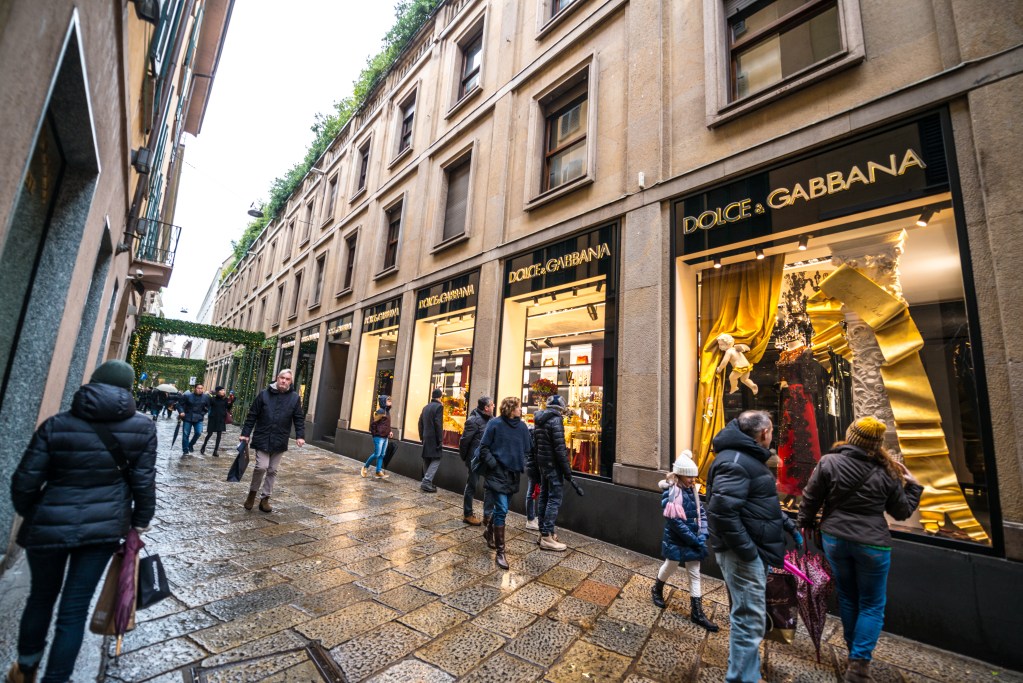
Via Montenapoleone, Via Manzoni, Via della Spiga, and Corso Venezia make up the famous Fashion Quadrilateral, home to some of the most prestigious boutiques in Milan. This area is known for its high concentration of luxury brands and is a hotspot where you’re very likely to spot celebrities.
For more information: The Fashion Quadrilateral of Milan: Italy’s Most Stylish District


Brera
Brera, located in the heart of Milan and known as the artists’ quarter, is considered by many to be the most charming and evocative area of the city. With its timeless allure, Brera stands out as Milan’s artistic hub thanks to the presence of the Pinacoteca di Brera and numerous art galleries, as well as being a vibrant center of Milan’s nightlife.
The Palazzo di Brera, dating back to the 17th century, is a treasure chest of cultural heritage. It houses the world-renowned Pinacoteca di Brera, where you can admire masterpieces such as The Kiss by Hayez, The Dead Christ by Mantegna, and Supper at Emmaus by Caravaggio.

Isola
In recent years, this area has truly flourished, becoming a hub for design and finance. Walking through its streets feels like being immersed in a New York-like atmosphere. Here you’ll find something for every taste: trendy cafés, stunning boutiques, vintage shops, and laid-back bars set inside former warehouses.Must-see sights:
– Sanctuary of Santa Maria alla Fontana
– Biblioteca degli Alberi (Library of Trees)


This is also where you’ll find the famous Bosco Verticale (Vertical Forest), designed by the Boeri Studio—specifically by architects Stefano Boeri, Gianandrea Barreca, and Giovanni La Varra. The project consists of two iconic buildings, with every balcony hosting a variety of plants, forming a kind of urban jungle made up of around 900 different species.
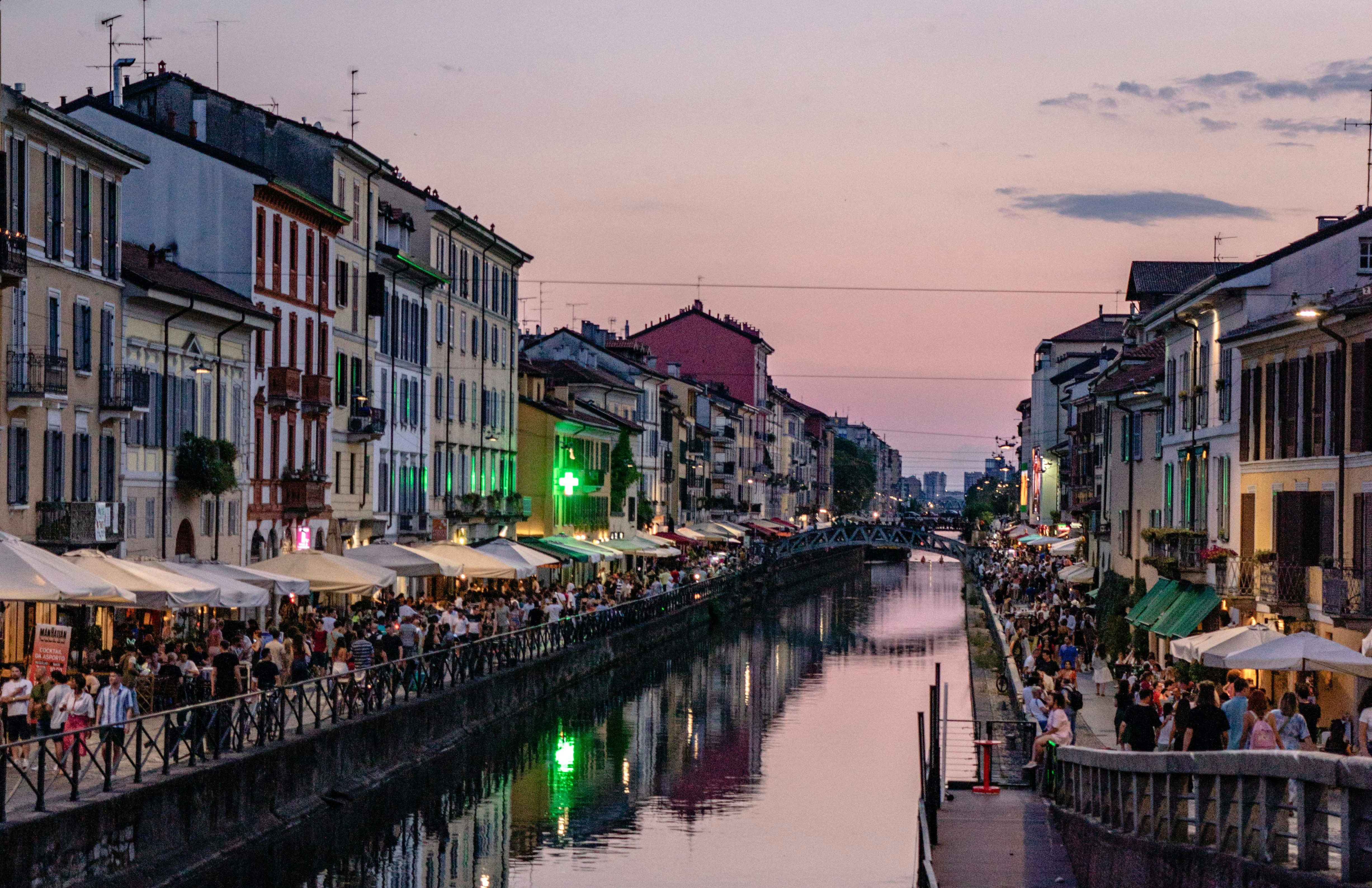
Navigli
The term ‘Quartiere dei Navigli’ refers to the area around the Darsena – Milan’s historic port – and the streets running alongside the Naviglio Grande (once a waterway connecting Milan to Switzerland) and the Naviglio Pavese, which linked the city to Pavia.

In summer, you might come across canoes, SUPs (stand-up paddleboards), dragon boats, and various rowing boats from different rowing clubs gliding along the Naviglio Grande. You can also stop to enjoy a cold drink or have dinner at one of the many venues along the canal banks, or in the Darsena area.
The sunset is always breathtaking, and in the evening, as the temperature drops, the nightlife comes alive.
On foot or by bike, follow us through the ideal stops in a neighborhood that never fails to surprise us.
Vicolo dei lavandai
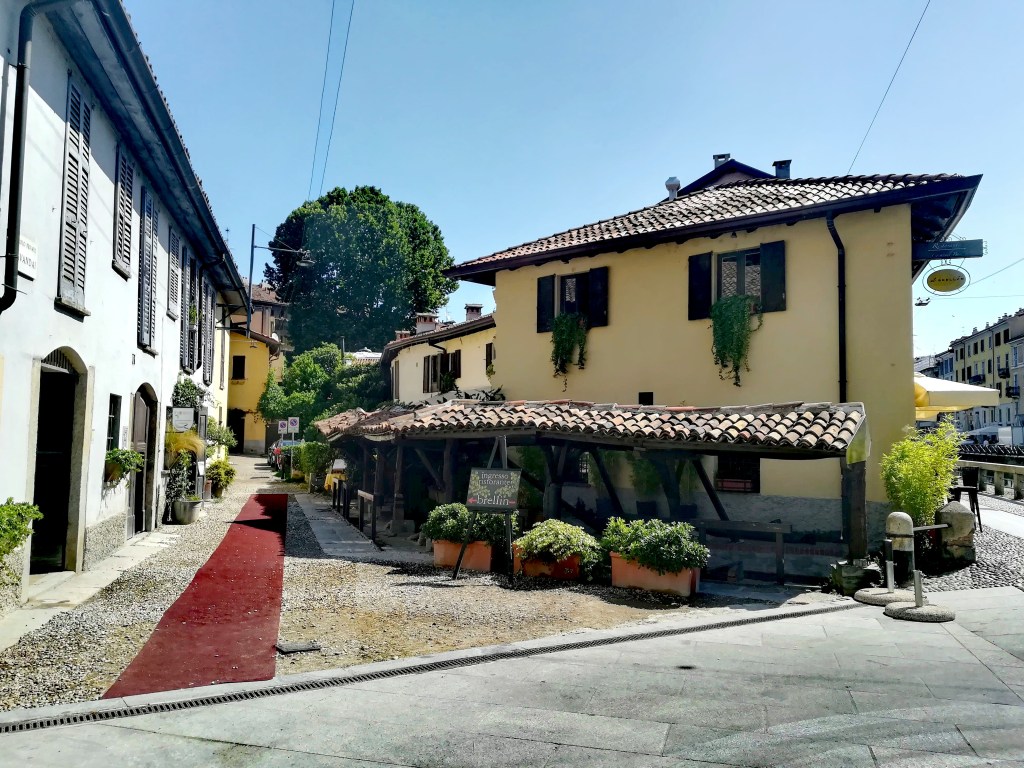
A charming and iconic spot — an almost mandatory stop if you want to take home a “postcard from the Navigli” on your smartphone, perhaps after visiting one of the nearby shops selling books, crafts, records, or comics.
The name “Vicolo dei Lavandai” (“Alley of the Launderers”) comes from the old washhouse found there, which was used up until the late 1950s for washing clothes and linens. Originally, this work was carried out by men belonging to the Confraternity of Launderers of Milan, founded in the 18th century. These launders would kneel on wooden boards called “brellin” and scrub clothes against stone washbasins, using a natural detergent called “palton”, made from ash, soap, and soda.
Antiques market
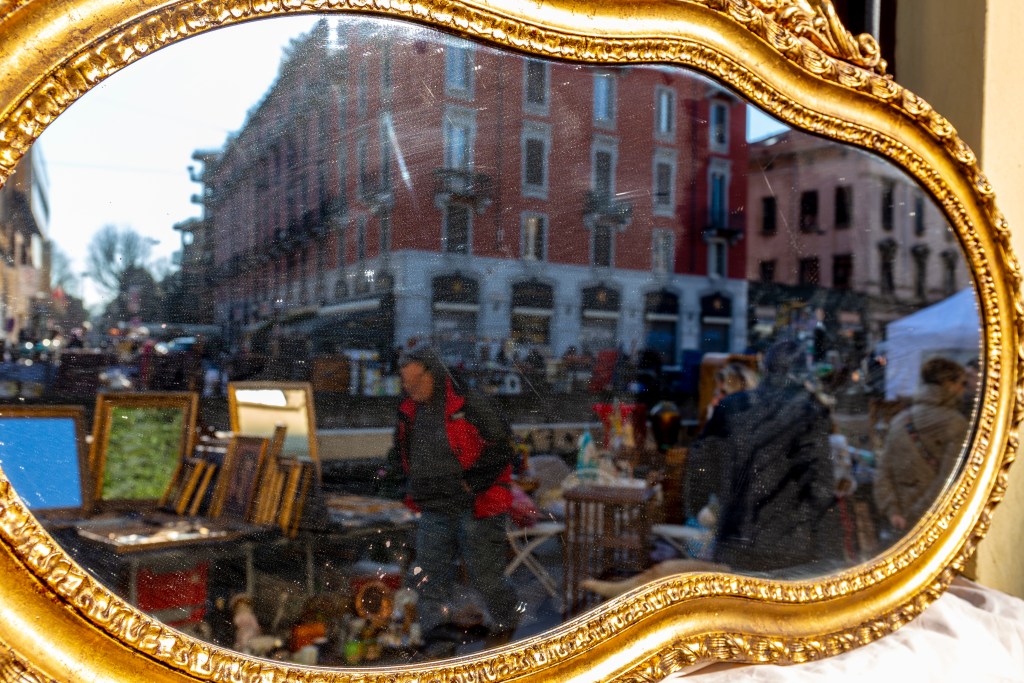
A regular event on the last Sunday of each month: stalls line the banks of the canal, and this almost floating market becomes the perfect place to find that vintage piece of furniture you’ve been looking for, a unique accessory, or an out-of-print book.
MUDEC and Tortona District
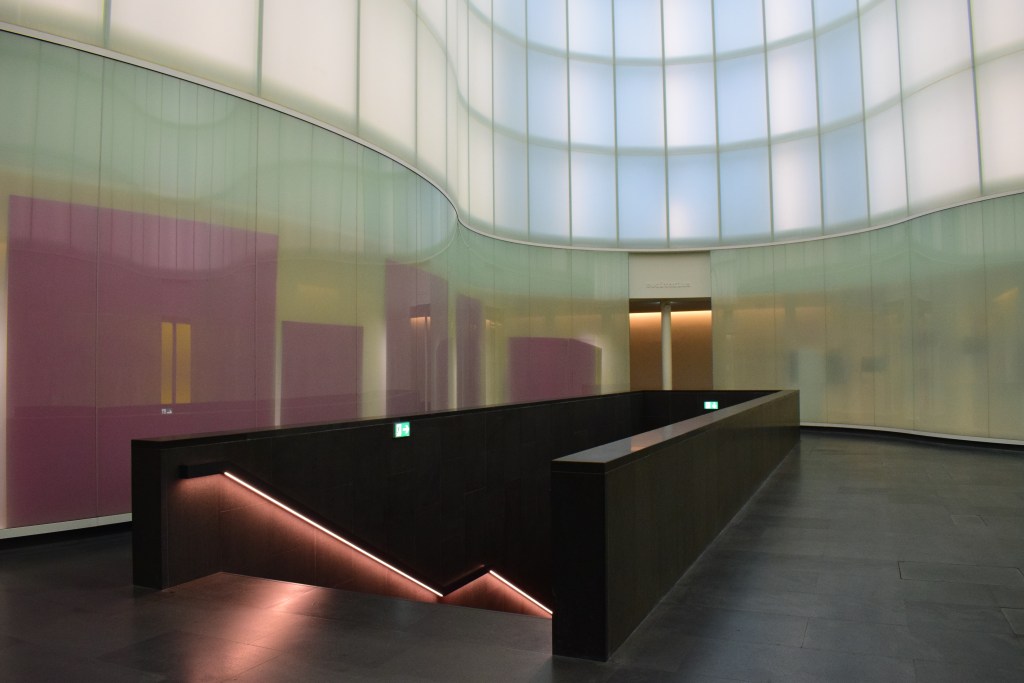
Over time, MUDEC has earned its place as a key cultural landmark in the Tortona district. Just a few hundred meters from the Navigli, its distinctive building houses the City of Milan’s ethno-anthropological heritage, along with a variety of temporary exhibitions.
MUDEC houses a permanent collection of over 7,000 artworks, everyday objects, textiles, and musical instruments from all continents, with a special focus on non-European cultures. These artifacts, collected since the 19th century, come from the Ethnographic Collections of the City of Milan and were restored and reinstalled in 2021. The museum also hosts internationally renowned temporary exhibitions.
Colonne di San Lorenzo

Milan was once a capital of the Roman Empire, and this Corinthian-style colonnade is one of the most visible and best-preserved signs of that era. It stands in front of the basilica of the same name, exactly halfway between the Duomo and the Navigli.
The Colonne di San Lorenzo (Columns of San Lorenzo) are one of Milan’s most iconic monuments, bearing witness to the city’s Roman heritage and serving as a cultural and social landmark in the heart of the city.
Located on Corso di Porta Ticinese, in front of the Basilica of San Lorenzo Maggiore, these sixteen marble columns from Musso, about 7.6 meters tall and topped with Corinthian capitals, date back to the 2nd century AD.
They likely came from a Roman public building and were moved in the 4th century to adorn the atrium of the new basilica. The current arrangement, featuring a central arch and cross, dates to the medieval period, between the 11th and 12th centuries.
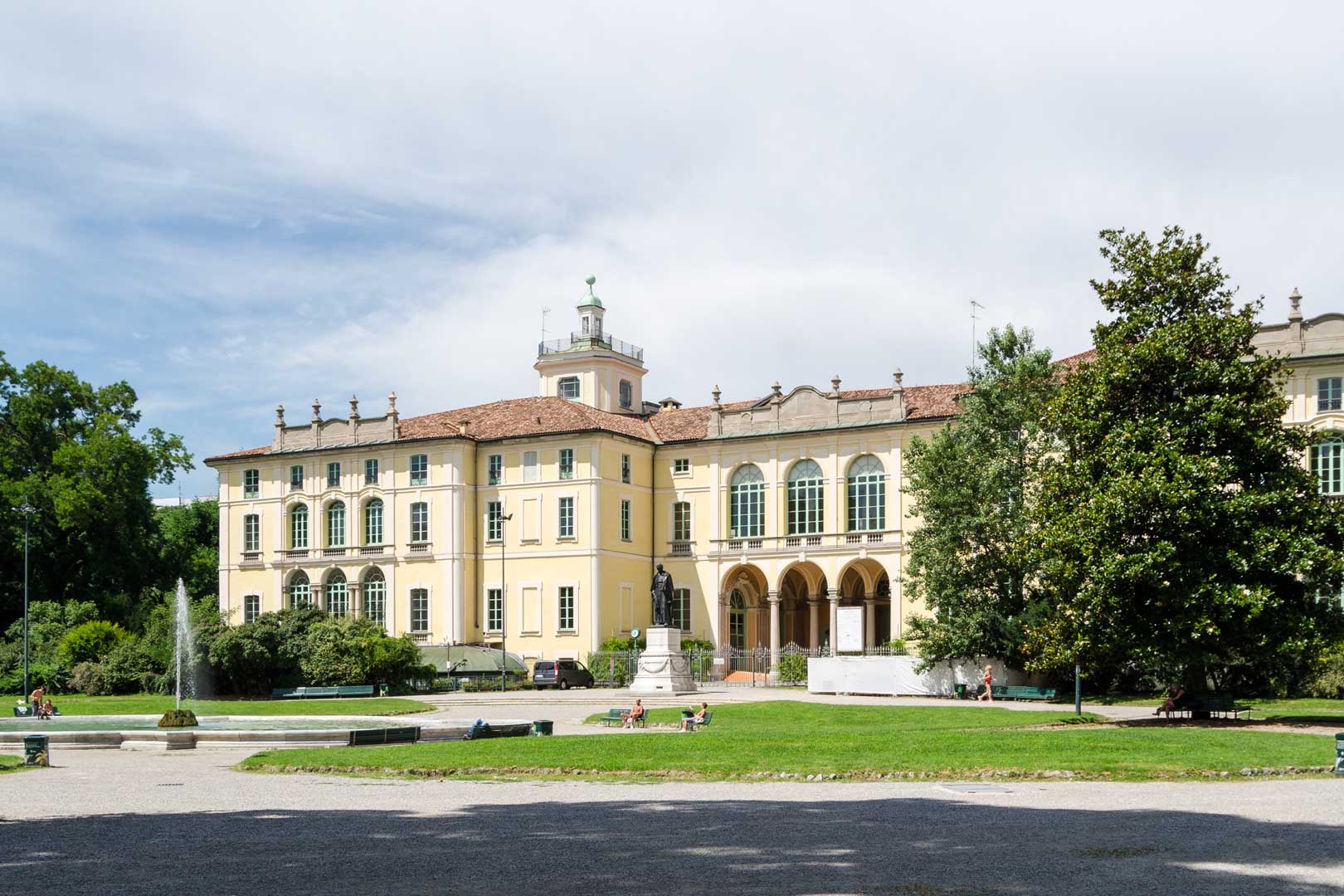
The most beautiful villas in Milan
Villa Litta in Lainate

It is a historic villa known for its Nymphaeum, a complex of artificial grottos and water features, as well as for its decorations, frescoes, and rooms that reflect the leisure and amusements of the time.
Villa Arconati in Bollate

Villa Arconati in Castellazzo di Bollate is a historic villa located in the Groane Park, also known as the “Little Italian Versailles”. Home to the Augusto Rancilio Foundation, the villa has been restored and reopened to the public with a new visitor route that includes the Museum Room, the Arconati Library, and the Garden.
Villa Necchi Campiglio

A residence surrounded by a quiet garden in the center of Milan, Villa Necchi Campiglio preserves masterpieces of art and still exudes the refined and lively atmosphere of the city between the two World Wars. Nestled in the heart of a peaceful neighborhood, the villa was designed in the early 1930s by architect Piero Portaluppi at the request of sisters Nedda and Gigina Necchi, and Gigina’s husband, Angelo Campiglio, members of an enlightened and forward-thinking Lombard industrial bourgeoisie.
Residenza Vignale
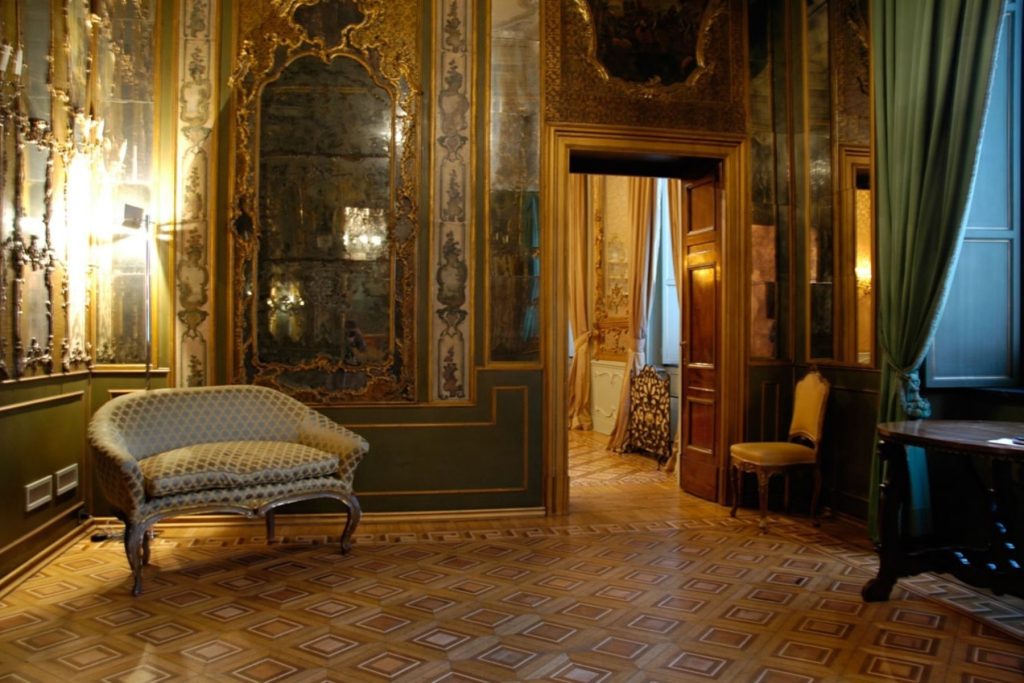
Residenza Vignale was established in the early 20th century as the private residence of an Austrian prince who, having fallen in love with a Milanese woman, decided to move to the city in hopes of winning her heart, while remaining anonymous.
The prince entrusted the design of his home to architect Gattermayer, known for his work on Liberty-style residences along Corso Magenta and for several projects in Abbiategrasso. Gattermayer, assisted by Adolf Loos, the famed architect of Belle Époque Vienna, created a building with a modest exterior that concealed lavish and elegant interiors.
Villa Clerici
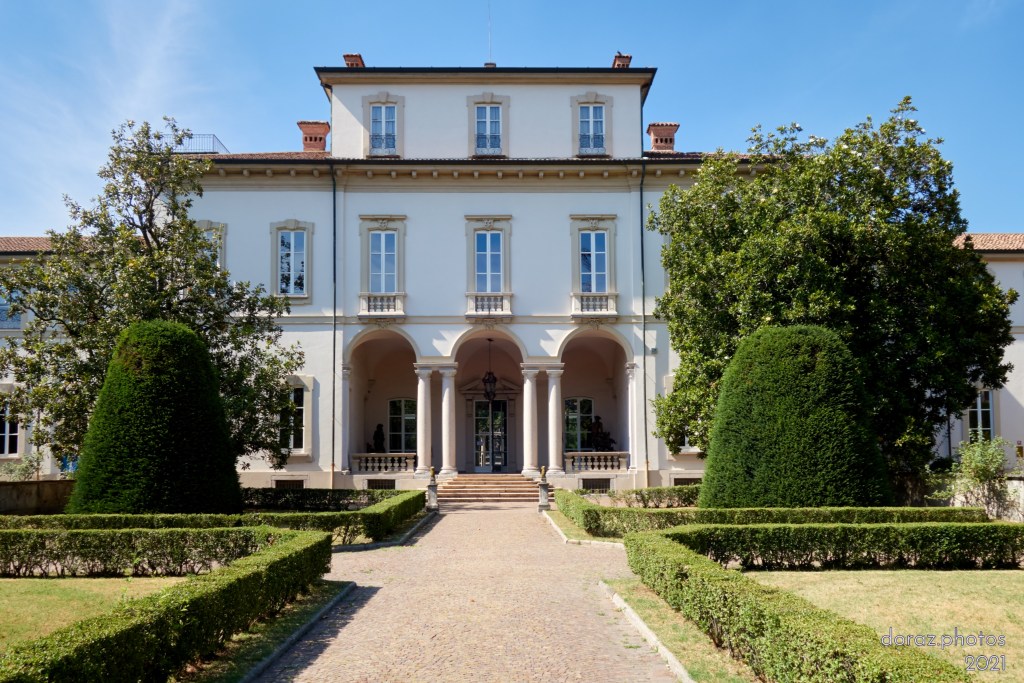
Villa Clerici has preserved its architectural features over the centuries and, although now detached from its original context, it stands as a significant landmark in the built fabric of Niguarda, in the northern part of Milan, along Via Terruggia. Inside, the main rooms retain numerous valuable elements, such as coffered ceilings, painted door frames, and fireplaces.
Particular prominence is given to the grand three-flight staircase, with a Miarolo stone balustrade and crouching statues at each turning point, modeled after Palazzo Clerici in the city center, and to the Hall of Mirrors on the villa’s mezzanine floor. Set up in the early 19th century and decorated with trompe-l’oeil paintings, the room features a remarkable coffered and ornamented ceiling.

Winter Olympic Games 2026
Milano Cortina 2026 – Official video
The official video for the Milano Cortina 2026 Winter Olympics is a visual anthem to Italy’s energy, beauty, and diversity. Through breathtaking images of the Alps, urban glimpses of Milan, and thrilling sports moments, the film celebrates the Italian spirit and excitement for the Games.
This entire video, included logos images and music, belongs to the respective owners and is solely intended for voiceovering demonstration purposes. No copyright infringement intended.