
Digital Revolution: Technologies Shaping the Future of Society
-
 Ancillary Meetings / Workshops – ECIS 2026
-
 Conference Theme: Digital Revolution: Technologies Shaping the Future of Society
-
Location: Milan, Italy
-
Conference Dates: June 13–17, 2026
-
Ancillary Meetings Dates: June 13–14, 2026
The ECIS 2026 Organizing Committee invited proposals for ancillary meetings to be held in conjunction with the conference (https://ecis2026.it).
Ancillary meetings will provide a valuable opportunity for scholars, practitioners, and research communities to convene around specialized topics, foster collaboration, and advance the field of Information Systems.
The call for Ancillary Meeting proposals closed on February 15th, 2026 (23:59 CET).
The schedule of accepted ancillary meetings is currently being finalized and will be published on this page as soon as it becomes available.
About Ancillary Meetings
Ancillary Meetings are typically partial- or full-day sessions that facilitate discussion and exploration of ideas, techniques, and methodologies that advance research and teaching knowledge of IS-related concepts, as well as products from industry and their application to academia, educational curricula, or industry practice.
They will include workshops, tutorials, or networking and community-building events.
Review and Selection Process
Workshop proposals were evaluated by the Ancillary Meetings Chairs in collaboration with the Conference and Program Chairs. Decisions were based on relevance to the ECIS community, clarity and completeness of the proposal, no overlap with the main conference tracks and potential to attract participants, space availability.
Organizers of approved ancillary meetings are responsible for managing the review process (if applicable), publicity, and website management, and for coordinating closely with the Ancillary Meetings Chairs and the ECIS 2026 local organizing team to finalize logistical details.
Additional information for workshop organizers
In preparation for the workshop, below is a list of next steps:
-
Finalize the organizing and program committees, and set an internal timeline for required activities (e.g., submissions, reviews, and participant notifications).
-
Set up a workshop website (e.g., Google Sites or an institutional platform) that includes your workshop title and description, key dates, contact information, and, if required, committee details, submission instructions, etc.
-
Share the website address as soon as it is set up.
-
Share the call for contributions through appropriate channels, such as AISWorld, social media, and your academic networks, and also with ancillary workshop co-chairs.
-
Inform the ancillary meeting co-chairs about the submission and acceptance numbers as these data become available
-
Please remember that all workshop organizers and participants are required to pay the ECIS 2026 conference registration fee.
Organizers of approved ancillary meetings are responsible for managing the review process (if applicable), publicity, and website management, and for coordinating closely with the Ancillary Meetings Chairs and the ECIS 2026 local organizing team to finalize logistical details.
Please note that all workshop organizers and participants are required to register for the ECIS 2026 conference.
ECIS 2026 Ancillary Meetings Chairs:

Gianluca Salviotti
(Bocconi University, Italy)
gianluca.salviotti@sdabocconi.it

Aakanksha Gaur
(SDA Bocconi, Italy)
aasha.gaur@sdabocconi.it
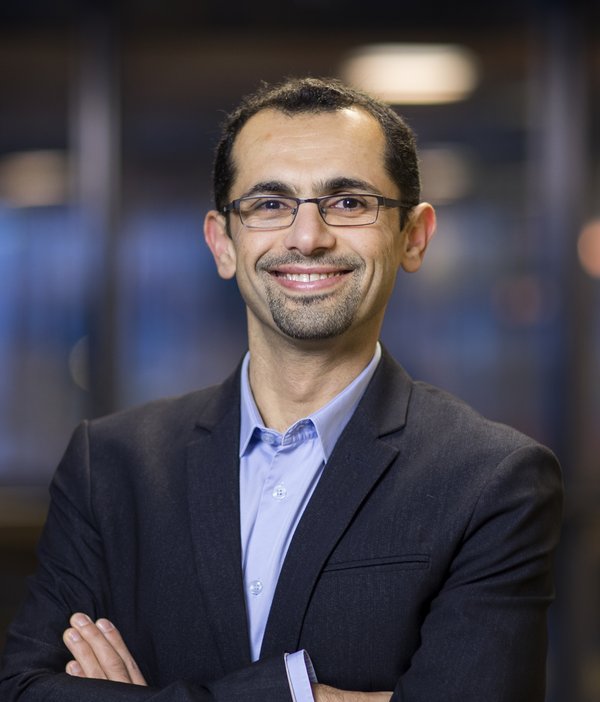
Oktay Turetken
(Eindhoven University of Technology, Netherlands)
o.turetken@tue.nl
Ancillary Workshop
June 13th – Morning 08:30 onwards
 JAIS Workshop JAIS Workshop |
+
| This workshop offers a supportive environment for authors seeking to develop and refine their research papers for journal submission within the IS field. We welcome submissions reflecting a wide range of research paradigms, methodologies, and stages of completion. The primary goal is to provide constructive feedback to help authors strengthen their manuscripts for journal submission. Participants will benefit from discussing their work-in-progress and receiving valuable feedback from JAIS senior editors, as well as peer participants. Building on the success of similar JAIS Paper Development Workshops at ICIS and other conferences, this workshop features intensive roundtable discussions for authors whose manuscripts have been accepted. While submission to JAIS is encouraged, participants are not obligated to submit their work to the journal. The workshop advances the community’s understanding of developing impactful IS research with strong theoretical contributions. | ||
| Contacts: | ||
 Julian Prester Julian Prester |
 julian.prester@sydney.edu.au julian.prester@sydney.edu.au |
|
|
Bots, AI, And The Future Of IS Scholarship |
+
| This proposed workshop, “Bots, AI, and the Future of IS Scholarship,” aims to: 1. Present frameworks that explain how AI systems shape scholarly knowledge production. We will contrast rule-based automation with generative and agentic AI, highlighting their implications for theory development. 2. Discuss methodological transformations, including effects on data collection, coding, analysis, writing, and reviewing. We will discuss common pitfalls while identifying best practices. 3. Address ethical and institutional concerns, including authorship norms, disclosure standards, responsible use policies, and the need for transparent, fair, and accountable AI integration. | ||
| Contacts: | ||
|
Carolina A. de Lima Salge |
calsalge@uga.edu |
|
|
Women in IS: Pathways to Impact, Leadership, and Belonging |
+
| The workshop aims to explore the diverse ways in which individuals and communities whose voices, perspectives and contributions have historically been underrepresented or overlooked within the Information Systems (IS) domain create impact through research, leadership, mentorship and innovation. As IS scholarship evolves alongside rapid technological and societal change, it becomes increasingly important to understand how visibility, participation, and influence are distributed, and to explore how more equitable futures and trajectories can be made possible. While challenges remain, this workshop seeks to shed light not only on the obstacles but also on the achievements and strategies that foster meaningful engagement and long-term belonging in the IS field. | ||
| Contacts: | ||
|
Efpraxia Zamani |
efpraxia.zamani@durham.ac.uk |
|
June 13th – Afternoon 13:30 onwards
|
Trust In The Spotlight: Control–Trust Dynamics In The Design And Performance Of Data-Sharing Ecosystems |
+
| Rapid rise of data-sharing ecosystems, such as those enabled by Digital Product Passport (DPP) infrastructures and health and manufacturing data spaces, has introduced new forms of value cocreation and interdependence among actors (Fassnacht et al., 2025), while making trust increasingly dynamic and distributed among heterogeneous, loosely coupled actors (Aguiar et al., 2024). Although the trustworthy information system/artifact design is often seen as a prerequisite (Söllner et al., 2012), trust must also be actively (re)created through use for effective ecosystem functioning – an area, where comprehensive scholarly insights are still missing. In this workshop, we examine data-sharing ecosystems as rich empirical and conceptual settings for three reasons. They operate within regulatory-dense environments, where regulations function as formal controls to align micro-level behaviors with macro-level objectives (e.g., EU circular economy goals). Second, infrastructures such as DPPs themselves exert control through monitoring, tracking, and governing actors’ behaviors. Third, the performance of these socio-technical systems generates interconnected layers of trust and control artifacts whose alignment is essential for sustainable value co-creation. | ||
| Contacts: | ||
|
Simon Schafheitle |
s.d.schafheitle@utwente.nl |
|
|
Impact of AI on Business and Society: from Automation to Human-AI-Collaboration” |
+
| Key dates and practical information: | ||
|
Submission deadline: 10 May 2026 Notification from the organizers: 15 May 2026 Workshop date and time: 13 June 2026, 2 pm CEST Location: To be confirmed, Milan, Italy Format: Half-day interactive workshop | ||
|
In recent years, Artificial Intelligence (AI) has been gaining significant momentum across various work and life settings, including automation, data analytics, digital companionship, and forecasting. Various AI methods and tools are being employed to derive insights from data, which are then used to bolster and propel digitalization within organizations and contribute to a sustainable digital future. While mature machine learning systems have been studied quite extensively in terms of organizational adoption and productivity effects, AI, and especially Generative AI, is a diversified and fast-evolving phenomenon. As a result, empirical research is still relatively limited, partly because of the rapid pace of technological change. We welcome primarily empirical and design-oriented contributions that analyze, explain or predict implications of AI on the organizations and societies of the future, or that design AI-based solutions in the context of digital and sustainable societies and organizations. Authors are encouraged to submit abstracts to our workshop for feedback prior to full paper submission. Click here to download the Call for Participation Download | ||
|
Contacts: | ||
|
Ann-Kristin Cordes |
akc@informatik.uni-kiel.de |
|
|
Aurelio Ravarini |
aravarini@liuc.it |
|
|
The Future Of Creating And Distributing Value In Digital Health Ecosystems (Ejis Special Issue) |
+
| Digital technologies play a pivotal role in creating and distributing value within health ecosystems. When it comes to health, however, the concept of value carries various meanings, such as financial benefits for health providers, an increasing quality of life of patients, wellbeing for ‘healthy’ citizens, or justice for societies. It remains an open question, for whom digital technologies create value, how and why. Moreover, considering various dimensions of value, we need to ask how technology affects how value is being distributed. This ancillary meeting provides a professional development workshop for scholars interested in “The Future of Creating and Distributing Value in Digital Health Ecosystems”, a Special Issue that currently invites authors to submit manuscripts to the European Journal of Information Systems. During this PDW, the editorial team will host a panel that carves out core conceptual, theoretical, methodological, and empirical remarks leading to the formation of the Special Issue. In the following, authors will join roundtable discussions to shape merging research opportunities. | ||
| Contacts: | ||
|
Lauri Wessel |
wessel@europa-uni.de |
|
|
The ‘Qualitative’ in Qualitative Comparative Analysis (Qca): Configurational Theorizing to Explain Information Systems Phenomena |
+
| This PDW proposal addresses the issue of a lack of fsQCA studies for qualitative data which is an important methodological innovation. This is also reflected in the feedback provided by ECIS2025 PDW participants that called for hands-on training on configurational theorizing using qualitative data. Furthermore, despite the growing interest in QCA studies in the IS domain, it is still largely viewed as an analytical method. By framing QCA as a theorizing approach in this proposed workshop, we are calling the attention and developing the skills set of IS researchers for more rigorous methodological execution to create new and informed IS knowledge especially for qualitative research. | ||
| Contacts: | ||
|
Mohsin Mallik |
mmalik@swin.edu.au |
|
|
ISR Paper development workshop |
+
| Contacts: | ||
|
Suprateek Sarker |
sarkers@virginia.edu |
|
June 14th – Morning 08:30 onwards
|
Developing Activity Theory In IS Workshop |
+
| The purpose of the Developing Activity Theory in Information Studies (DATIS) workshop is to provide a forum for Information Systems (IS) researchers, who use Activity Theory, or are interested in learning about it for their work and research. We welcome new IS researchers, Postgraduate and PhD Students, IS practitioners from industry, and established scholars of IS and Activity Theory. Our workshop and community have been growing in recent years and participants will find the workshop to be a welcoming and stimulating community experience. | ||
| Contacts: | ||
|
Stan Karanasios |
s.karanasios@uq.edu.au |
|
|
Digital Health Meeting @ECIS |
+
| Digital Health is an important factor for the ongoing transformation of healthcare delivery. Digital Health not only comprises technological innovations, data-driven insights, and patient-centered approaches, but also a focus on well-being, patient-self management and the specific challenges of the ageing generation. As the field is so broad and deep, advancing knowledge requires collaboration across disciplines, institutions, and national contexts. The Digital Health Meeting @ECIS aims to serve a collaboration and networking platform for Digital Health researchers at all stages of their career across all countries participating at the ECIS conference. | ||
| Contacts: | ||
|
Heiko Gewald |
heiko.gewald@hnu.de |
|
|
Exploring Critical Challenges For The Changing Nature Of Work |
+
| The workshop aims to explore these critical aspects of the changing nature of work. Through a blend of short presentations and group discussions, we seek to foster an exchange of ideas. The workshop will be conducted in-person, offering a conducive environment for dialogue. Keynote speakers will stimulate our thinking and provide valuable context for the ensuing round table discussions. Participants are invited to submit extended abstracts or brief case reports of up to 5 pages. | ||
| Contacts: | ||
|
Joschka Hüllmann |
j.huellmann@utwente.nl |
|
|
Exploring Phygital Phenomena |
+
| This workshop explores the concept of phygital phenomena—where digital technologies are deeply embedded in physical objects, creating new sociotechnical systems and blurring boundaries between the digital and physical worlds. The purpose of this workshop is to bring together scholars interested in understanding and theorizing these emerging phenomena. Through keynote presentations, interactive roundtable discussions, and a panel synthesis, participants will collaboratively identify key research questions, explore methodological approaches, and outline a shared research agenda. The workshop will also provide a platform for networking and community-building among researchers from information systems, management, and related fields. | ||
| Contacts: | ||
|
Aron Lindberg |
alindber@stevens.edu |
|
|
The Practice Of Computationally-Intensive |
+
| This workshop is an opportunity for the European Conference on Information Systems (ECIS) to reflect the field’s growing interest in, and for participants to learn about and exchange views on specific implementations of CTC-inspired work. We believe ECIS and its research community to be highly relevant to CTC research, and vice versa: European IS research demonstrates a long-standing history of design science and qualitative research; research methods deeply intertwined with CTC work. Simultaneously, European research’s proximity to and appreciation of theory (development) offer to bring together researchers to this workshop who reflect the entire spectrum of methodological and epistemological pluralism of our discipline. The workshop’s goal at ECIS is to grow and expand the CTC community by enticing the interest of others. By highlighting, sharing, and honing the practice of CTC work across IS, this workshop complements similar efforts at ECIS (e.g., Wurm et al. 2023) as well as at the field’s other major conferences (e.g., ICIS, CTO division at the Academy of Management). | ||
| Contacts: | ||
|
Anuschka Schmitt |
A.Schmitt2@lse.ac.uk |
|
|
ISJ PDW-Special Issue Digital Sovereignty |
+
| In this workshop and special issue, we use digital sovereignty to refer to the practical capacity of an actor (an individual, community, organisation, or nation) to make and enforce choices about how digital systems are sourced, procured, designed, governed, and used as well as to avoid, reshape, or exit dependencies that create risks to autonomy, rights, resilience, or collective values. This includes, but is not limited to, data governance and protection, reliance on global platform providers, service bundling and forced adoption, interoperability and standards, “choke points”, and transparency and control over AI models. Click here to download the Digital Sovereignty PDW-MILAN Download | ||
| Contacts: | ||
|
Daniel J. Veit |
daniel.veit@uni-a.de |
|
|
Laura Brandimarte Veit |
lbrandimarte@arizona.edu |
|
June 14th – Afternoon 13:30 onwards
|
Teaching with AI in Higher Education: From Insight to Impact |
+
| Key dates and practical information: | ||
|
Submission deadline: 18 May 2026, 11 pm CEST Notification from the organizers: 26 May 2026, 11 pm CEST Workshop date and time: 14 June 2026, 2 pm CEST Location: To be confirmed, Milan, Italy Format: Half-day interactive workshop and community-building event” | ||
|
The workshop aims to create an interdisciplinary forum where scholars, educators, and learning designers critically examine how generative AI is transforming teaching and learning in higher education. Its primary purpose is to advance a shared understanding of the pedagogical, ethical, and organizational implications of AI adoption, moving beyond abstract debates to evidence-based, practice-oriented insight. Click here to download the Call for Participation Download | ||
|
Contacts: | ||
|
Leonardo Caporarello |
leonardo.caporarello@unibocconi.it |
|
|
Roberta Cuel |
roberta.cuel@unitn.it |
|
|
Aurelio Ravarini |
aravarini@liuc.it |
|
|
Visions of Meaning for Impact-Oriented Information Systems Research in Times of Polycrisis: Quo Vadis? |
+
| In times of intertwined ecological, social, economic, and political crises — often referred to as a “polycrisis”— information systems (IS) research faces a renewed call for societal relevance and transformative impact. This workshop invites IS researchers to critically reflect on the meaning of “impact” today and how to achieve it through Impact-Oriented Information Systems (IIS) research. This may include design science research, action research, engaged scholarship, policy-oriented research, and more. The workshop aims to explore diverse understandings of impact, foster reflexivity among researchers, and co-create pathways for a more purposeful and transformative IS field. Through dialogue, reflection, and collaboration, participants will examine whether current theories, methods, and assumptions are adequate for addressing complex global challenges and work toward developing new visions of meaning for IIS research. The outcomes will inform a workshop report and help to establish an ongoing community of practice. Call for contributions: Go to page Click here to download the Call for Contributions Download | ||
| Contacts: | ||
|
Herwix, Alexander |
herwix@wiso.uni-koeln.de |
|
|
HCI Research In MIS: A Human-Centered Perspective |
+
| Key dates and practical information: | ||
|
**new** Workshop program: https://sighci.org/uploads/2026_ecis_workshop/2026_ECIS_HCI_Workshop_Program.pdf Call for Papers: https://sighci.org/conferences/2026-pre-ecis-workshop/ Submission deadline: April 16, 2026 Notification from the organizers: April 26, 2026 Camera ready manuscripts due: May 24, 2026 Workshop date and time: June 14, 2026, 14:00 to 18:30 CET Location: Conference venue (Bocconi University, room TBA), Milan, Italy Format: Half-day, community building and interactive, with oral presentations of accepted peer-reviewed Completed Research and Research-in-Progress papers and invited Poster papers. Workshop proceedings will be made available on https://sighci.org | ||
| New and exciting opportunities are emerging in the field of Human-Computer Interaction (HCI) due to advances in digital technologies, which range from immersive experiences involving Augmented and Virtual Reality (AR / VR) to intelligent agents and robotics. But at the same time, these digital technologies have given rise to unprecedented challenges with associated demands on how to optimize user experience. This in turn renders a human-centered perspective in contemporary studies on human-AI teaming, human-robot interactions, and the metaverse, among others, of paramount importance. This HCI Research in MIS Workshop at ECIS 2026 offers a forum for Management of Information Systems (MIS)-focused HCI researchers to not only engage in constructive and meaningful dialogues on contemporary HCI topics, but to also exchange ideas related to the field of HCI. | ||
| Contacts: | ||
|
Constantinos K. Coursaris |
constantinos.coursaris@hec.ca |
|
|
Ulrich (Ulli) Gnewuch |
ulrich.gnewuch@uni-passau.de |
|
|
ietske Van Osch |
wietske.van-osch@hec.ca |
|
|
Technology as an Enabler for Circular Economy (Tech4ce) |
+
| The purpose of the fourth Technology as an Enabler for Circular Economy (Tech4CE) workshop is to continue providing a dedicated platform for IS researchers to engage, collaborate, and contribute to the development of a resource-efficient society that is vital for both environmental sustainability and economic growth. | ||
| Contacts: | ||
|
Jyoti Mishra |
J.L.Mishra@leeds.ac.uk |
|